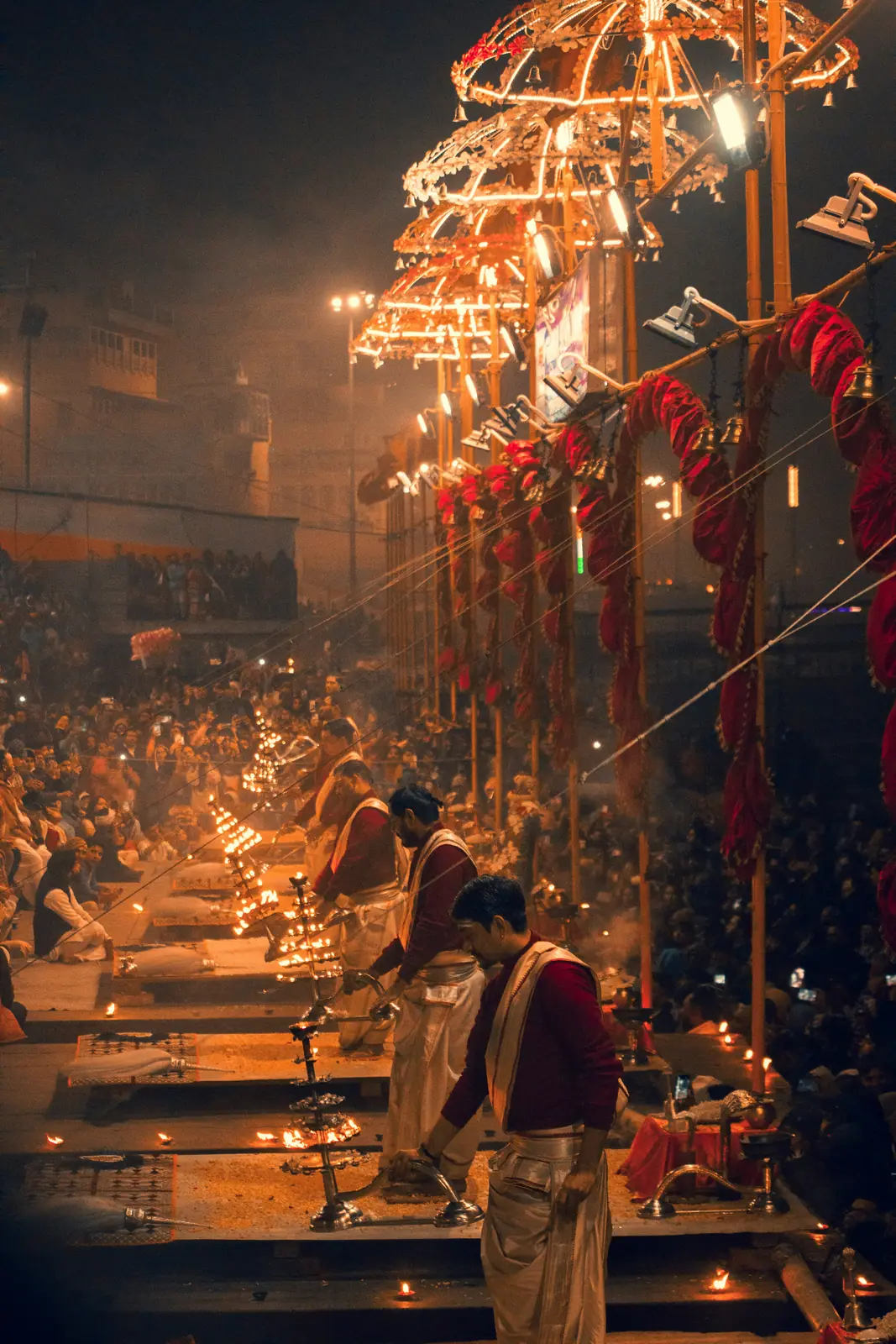
The Ganga aarti performed with lamps at Dashashwamedh Ghat at night

Varanasi Travel Guide · Updated Jun 2026

Darshan & the
Ganga aarti, sorted.

The temple, the evening aarti and the morning ritual are the heart of any Kashi trip — and the easiest things to get wrong on logistics. Here are the timings, the gates, the queues, the dress code and the seating, exactly as we brief our own guests.

Three experiences define a pilgrimage to Kashi: darshan at the Kashi Vishwanath Jyotirlinga, the Ganga aarti at Dashashwamedh Ghat after dusk, and Subah-e-Banaras, the quieter morning ritual at Assi. Each is unforgettable. Each also has its own rhythm — opening hours, security, queues, ticket types and crowd patterns — and getting those details right is the difference between a serene morning and a frustrating one.

This guide is purely practical. We’ve left the devotional writing to the temple itself and focused on what you actually need to plan: when to arrive, which gate to use, what you can carry, where to sit, and when a paid pass or a pre-booked boat is genuinely worth it. Timings shift with the season and on festival days, so treat these as reliable defaults and confirm the day’s schedule locally.
The Temple

Kashi Vishwanath
darshan, step by step.

Since the corridor opened, access is far smoother than it once was — but security is strict and the busiest hours still test your patience. Know the gates, the queue and the ticket options before you go.

  • The Kashi Vishwanath corridor opens around 3 am for Mangala aarti and stays open to roughly 11 pm, with a midday break for shringar and bhog.
  • General darshan is free. Enter via Gate 4 (Godowlia side) or the Dashashwamedh-side gates; security is airport-grade, with a separate ladies’ queue.
  • Sugam Darshan (a paid quick-access pass, a few hundred rupees) lets you skip the longest part of the line — worth it on festival days and weekends.
  • Special aartis — Mangala (pre-dawn), Bhog, Sandhya and Shringar/Bhog night aarti — need a paid ticket booked in advance, especially Mangala aarti.
  • No leather, mobiles, cameras or large bags inside the sanctum; free cloak rooms and lockers sit near the gates for everything you can’t carry in.
  • Dress modestly — covered shoulders and knees; many pilgrims change into fresh clothes after a Ganga dip before darshan.

The Evening Aarti

Dashashwamedh
after dusk.

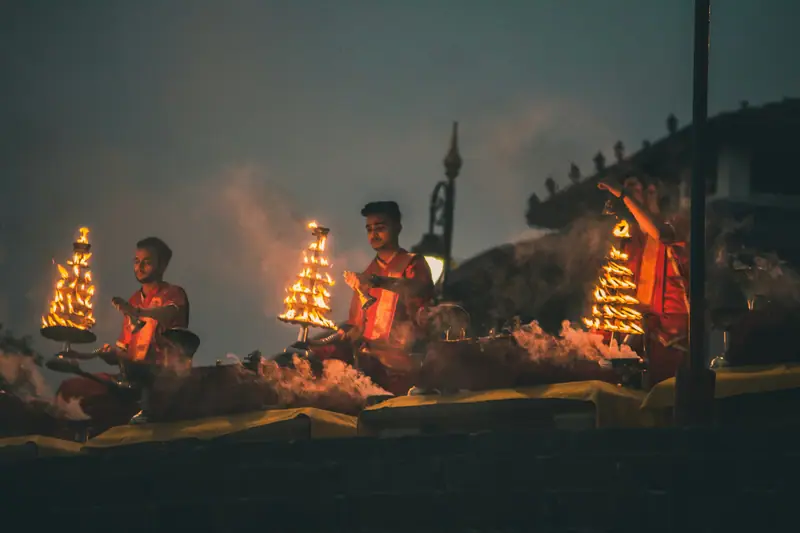
  • The Ganga aarti is performed nightly at Dashashwamedh Ghat — around 6:45 pm in winter, a little later in summer; it runs about 45 minutes.
  • For a seat on the ghat steps, arrive by 6 pm; the central platform fills first and the side steps give a clear, calmer view.
  • For a water view, take a boat 30–45 minutes before — boatmen anchor in a row facing the platform, the cooler and often more serene vantage.
  • A smaller, quieter aarti runs simultaneously at Assi Ghat to the south — far less crowded if Dashashwamedh feels overwhelming.
  • Seating on raised plinths or a reserved boat can be pre-arranged; on Dev Deepawali, Mahashivratri and weekends this is essentially mandatory.
  • Keep valuables zipped and close — the crowd is dense and pickpockets work the busiest nights; go light, with a hand on your bag.
Priests performing the evening Ganga aarti at Varanasi

The Morning Ritual

Subah-e-Banaras
at Assi Ghat.

If the night aarti is the city’s grand performance, the dawn ritual at Assi is its quiet prayer. Fewer crowds, soft light, classical music on the river — and the perfect prelude to a sunrise boat ride.

  • Subah-e-Banaras is the morning counterpart to the evening aarti, staged at Assi Ghat from about 5–5:30 am as the sun rises.
  • It blends a Ganga aarti, Vedic chanting, classical ragas and sometimes yoga on the ghat — a gentler, less crowded ritual than the night aarti.
  • It pairs perfectly with a sunrise boat ride: do the aarti at Assi, then drift north past the ghats as the city wakes.
  • Seating on the ghat is free and open; arrive by 5 am in winter (it starts with first light, which shifts through the year).
  • Dress warm in the cool months — pre-dawn on the river is genuinely cold from December to February.

How We Help

On-ground darshan
and aarti assistance.

On a private trip, the logistics above stop being your problem. Our local team arranges your aarti vantage in advance — reserved ghat seating or a boat anchored facing the Dashashwamedh platform — and gives you on-ground assistance at Kashi Vishwanath: which gate to use, whether Sugam Darshan is worth it that day, and how to book a special aarti like the pre-dawn Mangala.

On an ordinary weekday you may not need much help. On a festival day — Mahashivratri, the Dev Deepawali fortnight, a Sawan Monday — knowing the gates and the timings can save you literal hours. For ticket details and special-aarti pricing, see our Kashi Vishwanath ticket guide; to fit it all into a day plan, see our Varanasi itinerary and day tour.

Darshan & Aarti FAQ

The rituals, answered.

Still have questions? We reply within fifteen minutes on WhatsApp.

Ask About Darshan

Darshan, Made Simple

Let us handle the gates
and the seating.

Tell us your dates and we’ll sort your Kashi Vishwanath darshan assistance and Ganga aarti seating in advance — so you can simply arrive and be present. Replies within 2 hours.