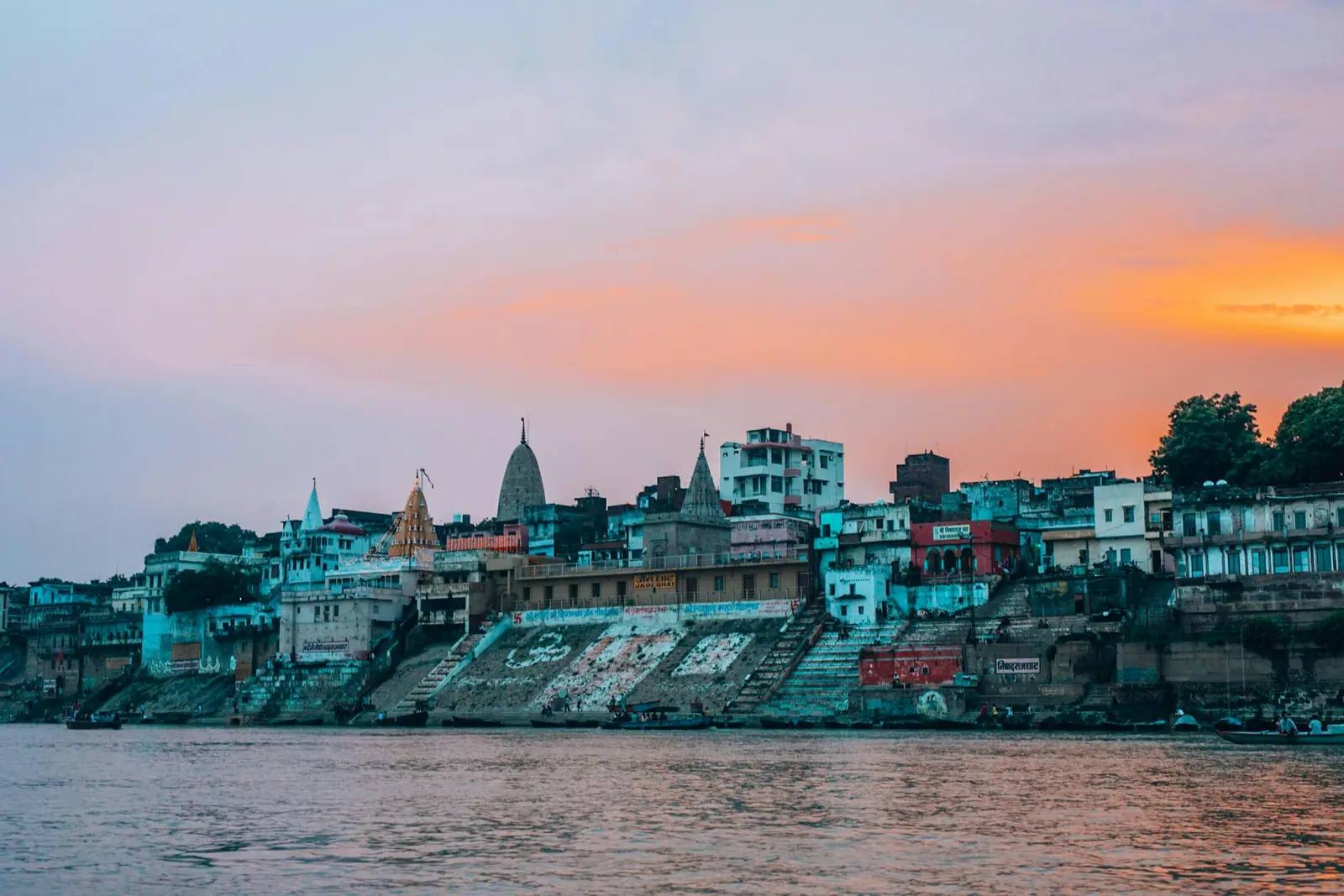
Golden sunset over the Varanasi ghats and the Ganga river

Varanasi Travel Guide · Updated Jun 2026

The best time
to visit Varanasi.

Kashi rewards you in every season — but each one is a different city. Here is the honest, month-by-month picture: the weather, the river’s mood, the festivals worth planning around, and where the crowds and prices really sit.

Varanasi is one of the oldest continuously inhabited cities on earth, and it does not pause for the calendar — the morning boats, the temple bells and the evening aarti happen whether you arrive in a December fog or a June heatwave. What changes is the experience around them: how comfortable the walking is, how high the Ganga runs, how full the ghats feel, and what a hotel room costs. There is no single perfect week. There is the right week for you.

We run private trips here through the year, so the notes below are what we actually tell guests on WhatsApp — not a tourism brochure. Read the three seasons, then the festival calendar, then decide honestly what you’re optimising for: weather, quiet, price, or a once-in-a-lifetime night like Dev Deepawali.
Season One · The Sweet Spot

October to March —
cool and clear.

If you only remember one thing: this is the season Varanasi was made for. Cool days, settled river, golden light. It is also the busiest and priciest, so book early and lean toward weekdays.

  • Day temperatures sit comfortably between 15°C and 27°C, with cool, clear mornings made for a sunrise boat ride.
  • The Ganga has dropped from its monsoon peak, so boats run on a settled river and most ghats are fully walkable.
  • Evenings are crisp — carry a light shawl for the Dashashwamedh Ganga aarti, especially December and January.
  • This is the window every photographer wants: low mist on the water at dawn, golden light on the ghats by 6:30 am.
  • The catch is that everyone knows it. Weekends, the Dev Deepawali fortnight and the December holiday peak fill hotels fast.

Season Two · The River Rises

July to September —
monsoon Ganga.

  • The monsoon brings the river up — in a heavy year the lower ghats and even some aarti platforms go underwater.
  • When the Ganga is in spate, the Dashashwamedh aarti is sometimes shifted to a higher platform; boats may be restricted on the most turbulent days.
  • Upside: far fewer tourists, softer hotel rates, and a dramatic, swollen river that has its own atmosphere.
  • Expect humidity and sudden downpours — pack quick-dry clothes, a compact umbrella and sandals you don’t mind getting wet.
  • Sawan (the monsoon month of Shravan) is hugely auspicious for Shiva, so Kashi Vishwanath sees enormous Monday crowds despite the rain.
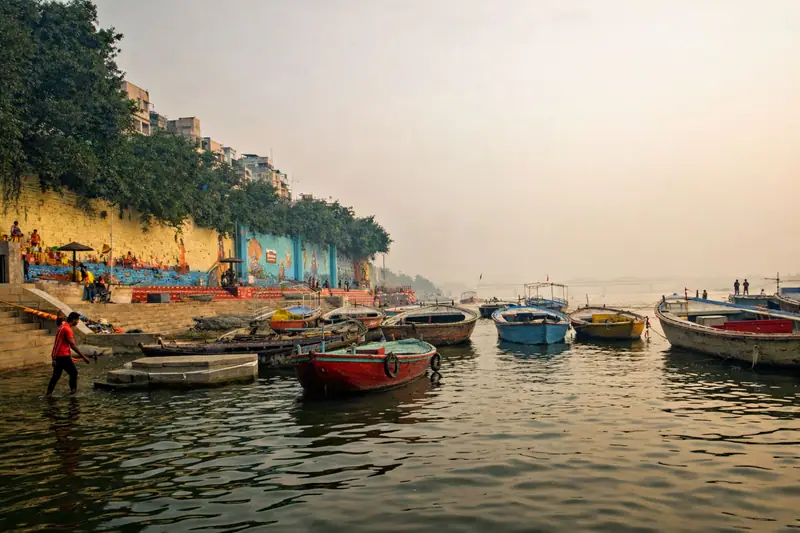
Boats on a misty, high Ganga at Varanasi during the monsoon

Season Three · The Heat

April to June —
hot but quiet.

Peak summer is genuinely demanding, but it is the cheapest and calmest time on the ghats. If you can structure the day around the heat, it works — particularly for budget pilgrims and solo travellers.

  • Peak summer is genuinely hot — 40°C and above through May and early June, with the riverfront stone radiating heat by midday.
  • Plan around it: an early sunrise boat, late-morning rest indoors, temple and aarti after 5 pm when it cools.
  • Hotels are at their cheapest and the ghats are at their quietest, so it suits budget pilgrims who can handle the heat.
  • Hydrate constantly, wear loose cotton and a hat, and never attempt a midday Kashi Vishwanath queue without water.
  • Late June begins to soften as the monsoon approaches, but humidity climbs in exchange for the falling temperature.

Plan Around These

The festivals that
shape the calendar.

Festivals are the soul of Varanasi — and the single biggest driver of crowds and room rates. Pick a festival deliberately, or pick the gaps between them deliberately. Either way, know the dates before you book.

  • Dev Deepawali (Kartik Purnima, Nov) — the ghats are lit with lakhs of earthen lamps; the single most spectacular night in Varanasi, and the busiest. Book months ahead.
  • Mahashivratri (Feb–Mar) — Kashi Vishwanath’s biggest night; expect very long darshan queues and a city-wide festival energy honouring Shiva.
  • Ganga Mahotsav (Nov, around Dev Deepawali) — a multi-day classical music and culture festival on the ghats; beautiful, and a reason rooms vanish.
  • Holi (Mar) — Varanasi’s Holi is famously intense; joyful but messy, so plan loose old clothes and protect your camera.
  • Kartik Purnima (Nov) — the full-moon dip and lamp-floating that overlaps Dev Deepawali; deeply devotional and very crowded.

The Two Rituals

Timing the aarti
and the sunrise boat.

Whatever season you choose, two experiences anchor every Varanasi trip — and both reward good timing. The sunrise boat ride is best pushed off the ghat between 5:30 and 6:30 am, when the river is glassy and the first light catches the temples; the cool months give you the cleanest mist, summer gives you a slightly later, softer dawn.

The Ganga aarti at Dashashwamedh Ghat begins around 6:45 pm in winter and a little later in summer. Reach the ghat by 6 pm for a seat on the steps, or watch it from a boat on the water — often the calmer, cooler vantage on a busy night. During Dev Deepawali and Mahashivratri the crowds multiply, so a pre-arranged boat seat is the difference between serene and overwhelmed. For the full ritual logistics, see our dedicated darshan and aarti guide.

Best Time FAQ

Timing your Kashi trip.

Still have questions? We reply within fifteen minutes on WhatsApp.

Ask About Dates

Pick Your Season

Tell us your month
we’ll tell you the truth.

Send us the dates you’re considering and we’ll tell you honestly what the weather, the river and the crowds will be like — then build a private trip to match. Replies within 2 hours.