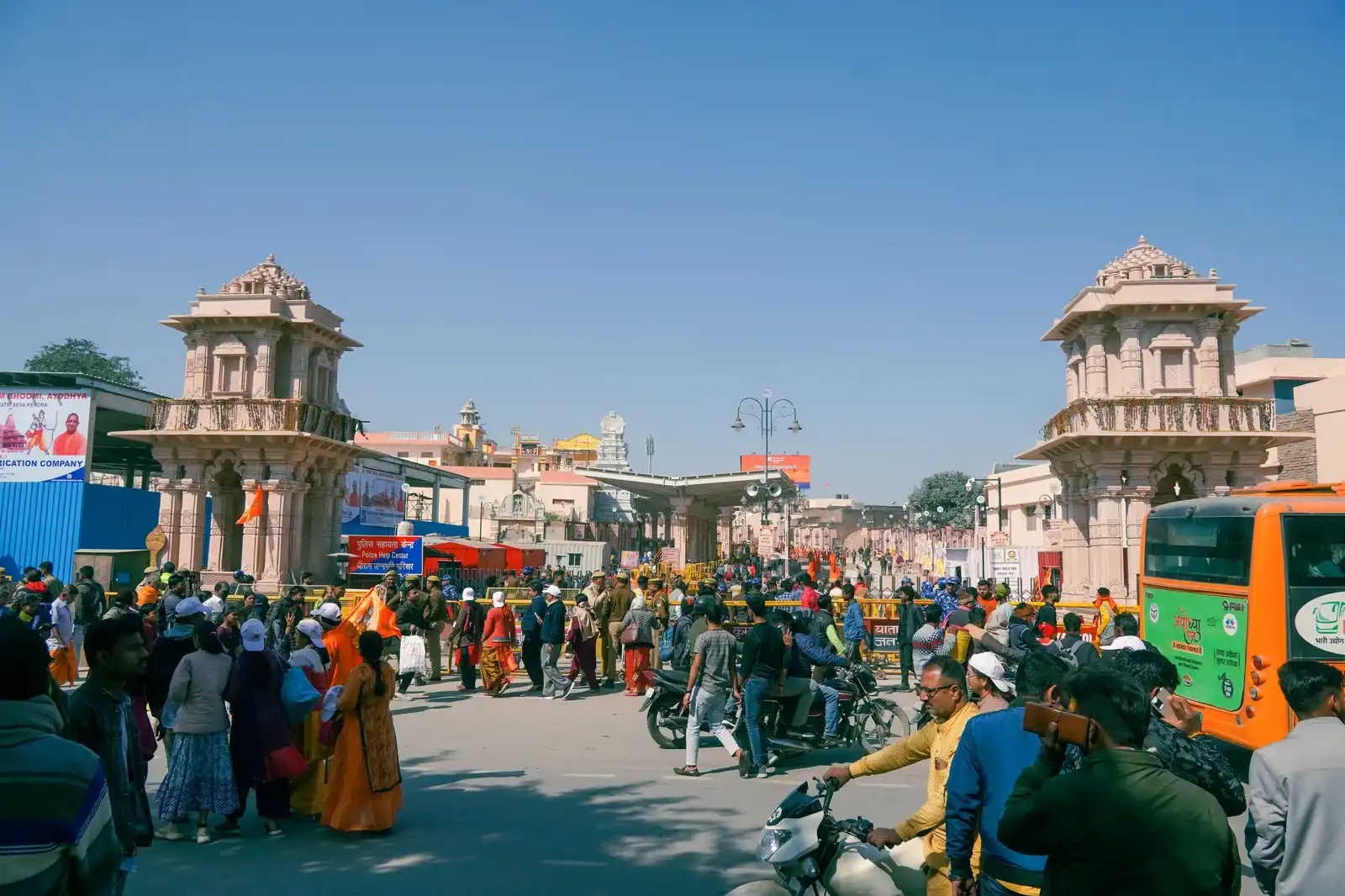
Sacred Uttar Pradesh
Varanasi to Ayodhya: A First-Timer's Complete Travel Guide
Two of India's most ancient cities, one unforgettable pilgrimage corridor.
Varanasi and Ayodhya sit at opposite ends of a spiritual arc that has drawn pilgrims for millennia — one the eternal city of Shiva, the other the birthplace of Rama. If this is your first time travelling between them, the journey deserves more than a booked seat and a hotel pin. This guide walks you through what to expect, what to do, and how to move between two cities that ask something of every visitor.
In this guide
- 01Understanding the Journey Before You Go
- 02What to Expect in Varanasi as a First-Timer
- 03Crossing to Ayodhya: How the Road Trip Actually…
- 04What to Expect in Ayodhya: Ram Mandir and Beyond
- 05Practical Checklist for First-Time Pilgrims
Understanding the Journey Before You Go
Two cities, two deities, one continuous thread of devotion.
Varanasi and Ayodhya are not simply tourist destinations — they are active centres of living faith. Varanasi, known to devotees as Kashi, is among the oldest continuously inhabited cities on earth and home to the Kashi Vishwanath Jyotirlinga, a pilgrimage magnet for Shaivites across the subcontinent. Ayodhya is the birthplace of Lord Rama — and the newly consecrated Ram Mandir, alongside the devotional energy of Saryu Ghat, has given the city a renewed spiritual gravity that is palpable from the moment you arrive. Together, the two form a corridor of devotion that most pilgrims describe as genuinely transformative.
What first-timers consistently underestimate is the emotional weight of visiting both cities in close succession. The ghats, the chants, the incense, the crowds — all of it accumulates. Pace your itinerary with intention, not just logistics. For orientation on what each city holds beyond the headline temples, the guide to Varanasi tourist places is a useful starting point before you finalise any plans.
The practical reality is reassuring: Varanasi to Ayodhya is approximately 200 km — about four to five hours by road — and all packages on this site use private AC vehicles with no shared transport, which means the journey between sacred cities is as comfortable as the cities themselves are profound.
What to Expect in Varanasi as a First-Timer
Eighty-four ghats, one eternal flame, and a city that never fully sleeps.
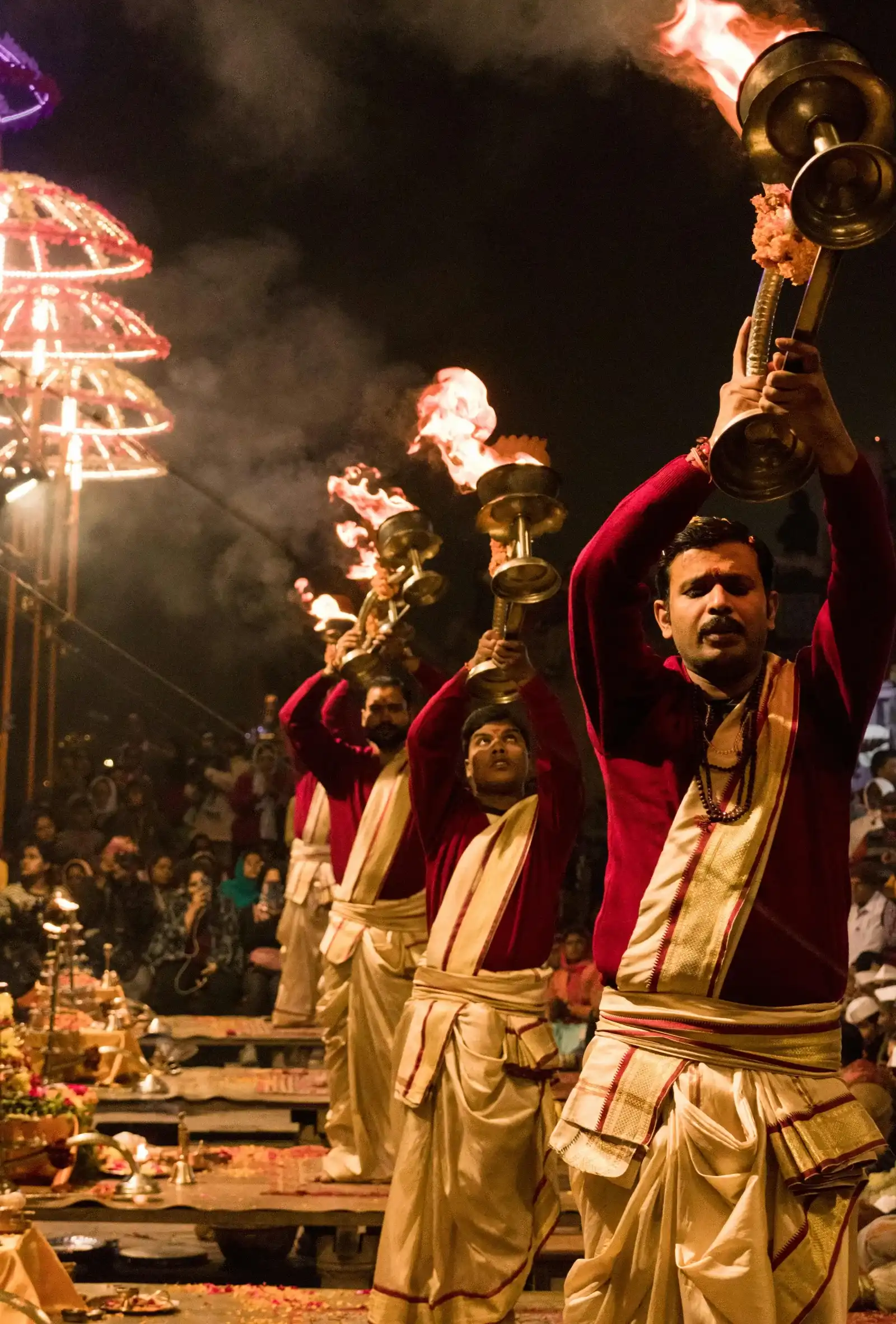
The Kashi Vishwanath Temple is the centrepiece of any Varanasi visit, and understanding its ticketing system before you arrive saves considerable frustration. General darshan is free, but on Mondays, weekends, and during Shravan month, the queue can stretch to three to five hours. Sugam Darshan — the fast-track option — costs ₹300 and reduces that wait to fifteen to twenty minutes. For those wanting a deeply personal encounter, Sparsh Darshan allows touch-darshan of the Jyotirlinga and is free, but requires booking two weeks in advance. The full breakdown of every aarti and entry option is available on the Kashi Vishwanath Temple ticket price page.
The Mangala Aarti, beginning at 3:00 AM, is considered the most sacred ceremony of the day — tickets cost ₹500 and booking is mandatory thirty days in advance. Slots open at midnight exactly on that thirtieth day and disappear within minutes; treat it like a train reservation in peak season. Even if you miss the Mangala Aarti booking window, the evening Ganga Aarti at Dashashwamedh Ghat is a visual and sonic spectacle that requires no ticket — only early arrival to secure a good vantage point before the lamps are lit.
Sarnath, the Buddhist circuit just outside the city centre, adds real historical depth to a Varanasi visit. Most first-timers plan only around the ghats, but the ancient stupas and the quiet museum at Sarnath offer a necessary counterweight to Varanasi's sensory intensity — arrive in the morning when the light is soft and the site is still calm.
Crossing to Ayodhya: How the Road Trip Actually Feels
The highway between Kashi and Ram's city carries its own quiet pilgrimage energy.
The drive from Varanasi to Ayodhya — approximately 200 km, taking around four to five hours by road — passes through the Uttar Pradesh heartland in a way no train journey quite replicates. Sugarcane fields stretch to the horizon, roadside mandirs punctuate the route, and a chai stop at a proper dhaba mid-journey is not optional — it is, quietly, part of the experience. This is not a stretch of highway to sleep through.
Leaving Varanasi in the early morning positions you to arrive in Ayodhya by mid-afternoon, giving you time to settle into your accommodation before the Saryu Ghat aarti begins in the evening. The timing matters. Arriving harried and late for your first Ayodhya aarti defeats the purpose of the entire journey. Plan the transfer as a considered transition, not a logistical gap.
A private AC vehicle — standard across all packages on this site — transforms the road trip from an ordeal into an extension of the pilgrimage itself. You stop where you want, carry your luggage without anxiety, and arrive with enough composure to actually receive what Ayodhya is offering. All varanasi ayodhya tour packages on this platform are built around that principle: the journey between the cities is not dead time, it is travel with intention.
What to Expect in Ayodhya: Ram Mandir and Beyond
A city reborn around its most sacred address.
The Ram Mandir at Ram Janmabhoomi is, without qualification, one of the most significant new temple constructions in modern Indian history — and in person, the scale and the devotional atmosphere are unlike anything photographs convey. The temple is open daily from 7 AM to 11 AM and again from 2 PM to 9 PM. VIP darshan queue management assistance is provided across all packages, which matters more than it sounds during high-footfall periods when the general lines move slowly. The full guide to the Ram Mandir in Ayodhya covers what to expect inside and how to plan your visit.
Most first-timers arrive at Ram Janmabhoomi and consider their Ayodhya visit complete. That is a real missed opportunity. Hanuman Garhi — the ancient hilltop temple dedicated to Lord Hanuman — and Kanak Bhawan, gifted according to tradition by Queen Kaikeyi to Sita-Ram after their marriage, both carry a depth that complements the main temple rather than competing with it. Build at least one full day around these three sites.
The Saryu Ghat aarti in the evening offers something distinct from Varanasi's Dashashwamedh ceremony — quieter, more intimate, and in some ways easier for first-timers to absorb without feeling overwhelmed. Stand close to the river as the lamps descend toward the water. After Varanasi's scale, Ayodhya's aarti feels like a conversation rather than a performance — and that shift in register is itself worth the journey.
Practical Checklist for First-Time Pilgrims
Small preparations that make a large difference.
Temple ticketing is the single most time-sensitive task on this checklist. Mangala Aarti booking opens exactly thirty days before the date at midnight — slots sell out within minutes, so set a reminder and be at your device when the window opens. For all other aartis at Kashi Vishwanath, book at least three to seven days in advance. Leaving tickets to chance on arrival is the most common — and most avoidable — mistake first-time pilgrims make.
Dress code and prohibited items deserve equal attention. Modest Indian attire is required at both major temple complexes — no shorts, no sleeveless tops, no leather items inside the sanctum. At Kashi Vishwanath, leather items including belts and wallets must be removed before entry. Mobile phones, cameras, smartwatches, lighters, and large bags are strictly prohibited inside the sanctum. Free lockers are available at the entrance; allow fifteen minutes extra for locker deposit during peak hours, particularly on weekends and Monday mornings.
For travel timing, October to March is ideal — the winters between November and February are the most pleasant for all outdoor sightseeing across both cities. If your dates fall near Diwali or Chhath Puja in Varanasi, the spectacle is extraordinary but advance planning is essential — book three to six months ahead for those periods. For comprehensive package options, itinerary structures, and pricing, the Kashi Vishwanath tour package page is the right next step once your dates are confirmed.
Frequently Asked
Everything you need
to know.
Ready to make the journey
Three days. Two sacred cities.
One itinerary built around both.
This package covers Varanasi's ghats and Kashi Vishwanath, the road through UP's heartland, and Ayodhya's Ram Mandir — with private transport, VIP queue assistance, and no shared vehicles.